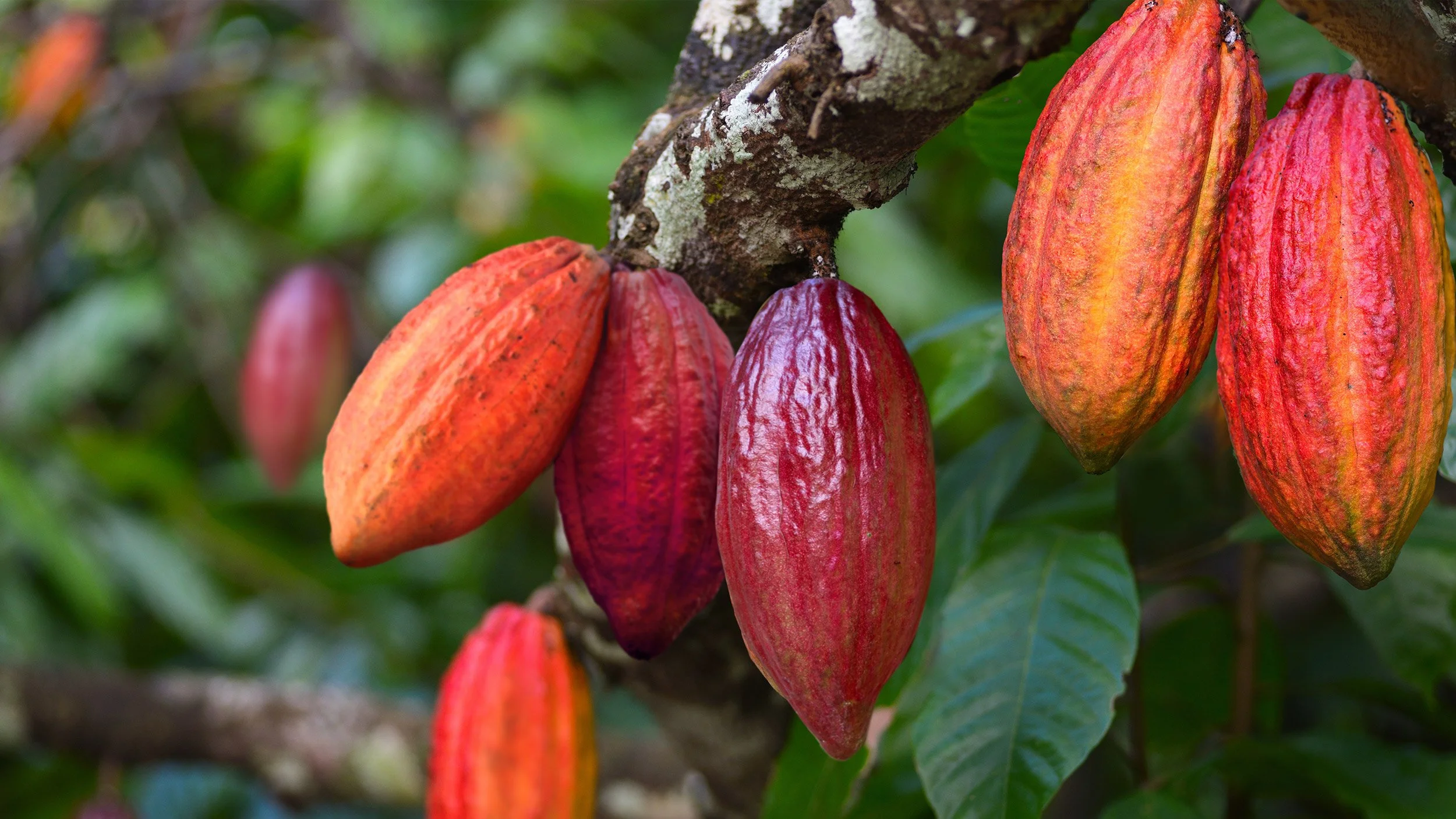
volatile Cocoa Prices creates uncertainty
Chocolate means comfort, celebration, a small everyday joy.
But behind that joy lies a crop under growing pressure - cocoa is becoming one of the food system’s most at-risk commodities.
-
From deforestation and low farmer incomes to child labour. Most cocoa is grown by smallholders, often in areas under pressure from climate change and crop diseases. In 2024, prices increased sharply, totalling 168% for the year, due to poor harvests caused by extreme weather. Last year, prices dropped, but underlying pressure remains, making the situation very volatile.
For us at Reitan Convenience, cocoa products, especially chocolate bars, bakery products and chocolate drinks, are staples. These items are highly favoured by customers and play a crucial role in our product assortment. Therefore, we need to ensure that we can keep offering these kinds of products. And since the sustainability challenges surrounding cocoa production raise significant concerns, both the social and environmental aspects of cocoa farming need to be addressed to ensure that these popular products remain viable in the long term.
Most of the world’s cocoa is grown in West Africa, specifically in Côte d’Ivoire and Ghana. These regions are also among the poorest in the world, where cocoa farming is a livelihood for many yet often fails to provide economic stability. Cocoa farmers are economically marginalised due to low prices, lack of infrastructure, and limited access to education and healthcare. These systemic issues not only perpetuate poverty among farming communities but also threaten the sustainability of cocoa production. When farmers are unable to make a living, the long-term viability of the industry itself is at risk.
What does all this mean for Reitan Convenience?
We believe that the climate-induced volatility in the cocoa industry will remain, and this is a commodity that we believe will be associated with increasing sourcing risks
We know that cocoa production also faces persistent and significant socio-economic issues, including the risk of exploitation and child labour. Despite large efforts in the cocoa industry to address these issues, major problems remain.
We acknowledge that sustainability programs and certifications intended to ensure ethical sourcing can be inadequate and confusing, despite good intentions. Often, these programs measure efforts made to drive positive change, rather than the actual results. It easily becomes a tick-box exercise, risking a false sense of progress.
Therefore, our strategy for cocoa involves reducing our overall dependency by supporting innovations such as cocoa substitutes and other solutions, and maintaining close dialogue with our suppliers to improve traceability and support more sustainable farming systems. The goal is to ensure that the cocoa sourced for our products comes from programmes and certification schemes that focus on genuine improvements in labour practices and environmental impact. The programs should also strive to ensure a living wage for all farmers.
Our perspective on common questions
What are the main social risks involved in cocoa production?
The main social risks include child labour, forced labour, and economic marginalisation of cocoa farmers. Many cocoa farmers in West Africa work under poor conditions with low wages, perpetuating cycles of poverty and inequality. Child labour remains a serious issue, with millions of children involved in hazardous work on cocoa farms.
How does cocoa farming impact the environment?
Cocoa farming contributes to deforestation, particularly in West Africa, where cocoa farms often encroach on protected forest areas. This leads to biodiversity loss and exacerbates climate change. Additionally, cocoa plants are vulnerable to climate change, making cocoa farming increasingly unsustainable as global temperatures rise and weather patterns become more erratic.
Why is it important to move beyond reliance on certifications?
Relying solely on certifications can create a false sense of security, as they may not address all aspects of sustainability. It is also essential to look beyond existing certifications and address the root causes of issues like poverty, child labour, and environmental degradation.
Share this content!
KEEP EXPLORING