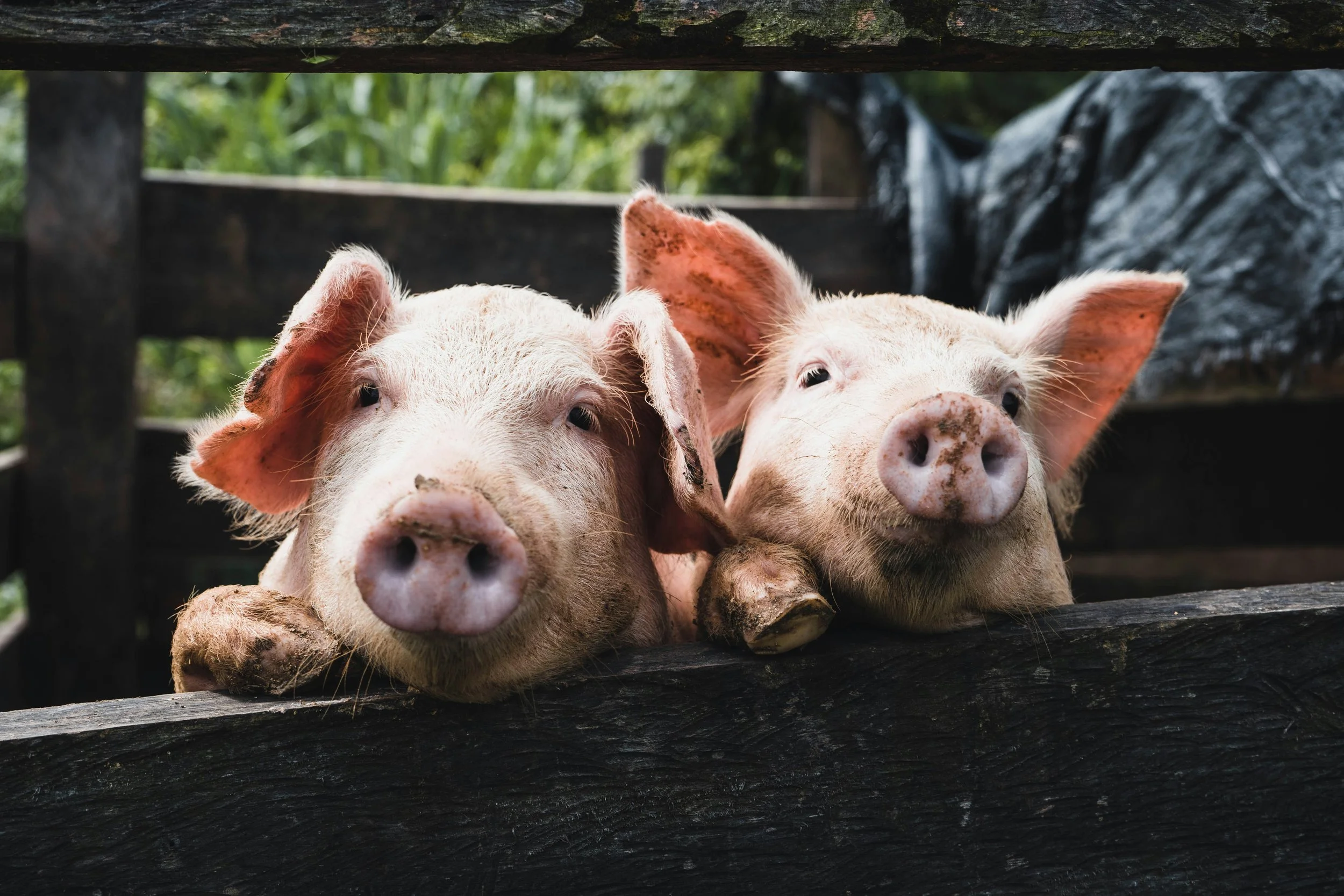
pork under
pressure
Convenience is built on predictability.
Predictable volumes
Predictable prices
Predictable access to what people crave
on the go
Here is the inconvenient truth: pork is
no longer predictable.
-
That is not just an agricultural issue. It is a core business risk. Around 50 per cent of our food-to-go sales are built on red meat, primarily pork.
When 20 per cent disappears
In 2025, Estonia and to a lesser degree Latvia were hit by an outbreak of African Swine Fever (ASF). ASF is a viral disease that affects domestic pigs and wild boar. Don't panic, it’s safe for humans. But very dangerous for pigs. Sometimes approaching 100 per cent mortality. As there is no effective, widely used vaccine, an outbreak is detrimental to pork production. Control relies on biosecurity and culling (slaughtering infected animals).
By September 2025, 56,000 pigs had been culled in Estonia. That equals around 20 per cent of the national herd.
Domestic pork output collapsed. Imports almost doubled. Self-sufficiency is projected to fall from 72 per cent in 2024 to 39 per cent in 2026. And the effects are long-term. Even after the outbreak is fully controlled, Estonia’s pig sector is expected to need at least 2–3 years to return to pre-crisis production levels.
For a pork-dependent value chain, that is not a fluctuation. It is more of a structural shock.
This Is the New Normal
ASF has existed for a century. But like many infectious diseases, it is increasingly prone to spread.
Ecological disruption, including wild boar expansion. Industrial intensification, with highly concentrated pork production. Global connectedness through trade and travel. Together, these forces make animal diseases capable of reshaping entire economies and supply chains. Including ours.
At Reitan Convenience, we analysed new types of value chain risks in 2024. One of the key risks identified is the emergence of animal diseases. We looked at exposure to bird flu, swine fever and rising antibiotic resistance. The conclusion was clear. Most of our categories are significantly exposed. Given our reliance on pork, an outbreak like this is not a distant possibility. It is a direct business vulnerability.
Diversify or Pay the Price
In Reitan Convenience Estonia, preparedness paid off.
Efforts had been made to reduce reliance on red meat and to diversify protein sourcing. That shift mattered when ASF hit! The move toward more chicken and plant-based options proved commercially valuable when pork supply collapsed. This is the insight we need to take seriously:
Reducing the risk concentration makes our business more resilient. Had that shift not started, the impact would have been significantly worse.But - as so often with sustainability - there are no silver bullets. Chicken is not a full solution. Prices are expected to increase as pork shortages affect demand patterns. And the risk of new bird flu outbreaks remains very high. Resilience requires more than substitution.
It requires diversification.
It requires a stronger move toward plant-based solutions.
It requires broader sourcing strategies.
In short, it requires structural change.
Why this matters for us
When we talk about assortment shifts. When we tighten our Supplier Code of Conduct. When we push for higher standards and broader protein strategies. It is not about ideology. It is about securing profitability.
The inconvenient truth is that disease outbreaks in animal production are no longer rare disruptions. They are recurring systemic risks.
In a convenience business built on speed and availability, supply chain fragility is not abstract. It hits margin, pricing, assortment and customer trust.
Being proactive is not bad for business; it is risk management and margin protection.
And that is exactly why we must keep driving the assortment shift going, bringing our customers, merchants/franchisees and suppliers with us.
———————————————————
Fact box: African Swine Fever in a global context
ASF is native to Africa but spread to Georgia in 2007, and from there to Europe, Russia and China.
Between 2018 and 2020, China experienced the largest animal disease outbreak in history. More than 50 per cent of the Chinese pig stock was lost. Around 200 million pigs were culled. The outbreak was visible in China's GDP.
Pork prices more than doubled by late 2019, reaching record highs. Food inflation in China exceeded 15 per cent year-on-year at its peak in 2019, largely driven by pork prices.
The consequences were global, visible in higher global demand for alternative proteins.
Share this content!
KEEP EXPLORING